
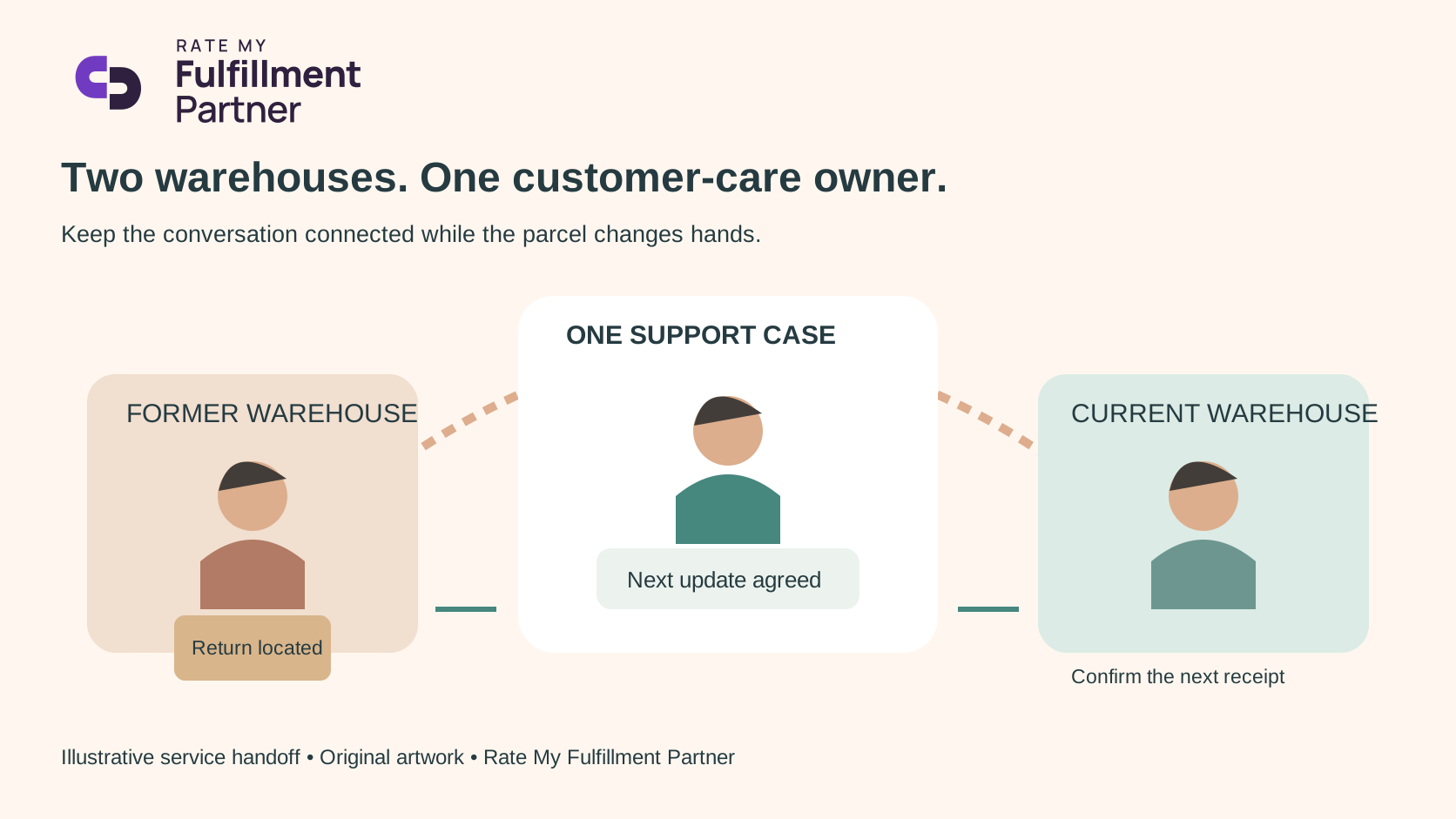
A customer uses the return label saved in an old email. Tracking says delivered, but your current 3PL cannot find the parcel. The customer has followed the instructions you supplied; asking them to negotiate between two warehouses is a poor handoff.
This situation deserves its own transition plan when switching fulfillment partners. It differs from a return with no order number: the label may identify the order perfectly while directing it to the wrong operation.
Start with the label the customer actually used
Shopify's return-label instructions let a merchant select a return destination from saved locations and update a default. That setting is useful, but it is not evidence that a particular previously issued label points to the new warehouse. Read the address on that label.
Collect the order reference, tracking number, destination and delivery event in one case. Ask the former warehouse to confirm physical receipt and the identifier it assigned. Keep customer documents in the access-controlled support record rather than forwarding them indiscriminately.
Separate three promises
The first promise is a response: somebody will take ownership of the investigation. The second is a stock decision: the warehouse will establish what arrived and where it is held. The third is the customer outcome: the brand will decide the refund or replacement under its policy. These promises need different evidence and may run on different timelines.
Here is a proposed service handoff, not a report of a tested process:
| Evidence available | Internal next step | Customer update |
|---|---|---|
| Delivered tracking only | Former warehouse checks receipt and holding area | We are confirming receipt at the address on your label |
| Parcel physically identified | Brand authorizes forwarding, inspection or another disposition | We have located your parcel and are arranging the next step |
| Inspection or agreed alternative evidence complete | Authorized team decides the customer outcome | Explain the decision and what happens next |
Do not promise a refund date based only on a carrier event if the brand has not authorized that promise. Equally, do not leave the customer waiting for an internal freight negotiation without an update.
Resolve the warehouse work behind the scenes
Before the old account closes, agree who can accept these parcels, how long they will be held, how records reach the brand and who approves transfer costs. Ask whether forwarding requires a consolidated shipment or can happen parcel by parcel. These are proposed requirements; the provider's capabilities and charges remain to be confirmed.
Use one transfer reference to connect the old receipt to the new receipt. Otherwise both sites may report the same unit as physically present, or neither may accept responsibility for its condition. A forwarding instruction should include what must remain with the item, such as its original return reference.
Close the loop without blaming the customer
A useful message says what is known, who owns the case and when the next update will arrive. It does not imply the parcel is lost merely because the new warehouse cannot see it.
Review the source of the old label after resolving the case. An outdated email template, saved return instruction or label enclosed in an older shipment may need a different correction. Fix that source while retaining the case record, so the next customer gets a clearer journey.
Related reading
Sources
- Shopify: Buying return labels — accessed November 10, 2026.