
A mismatch is an observation before it is a conclusion
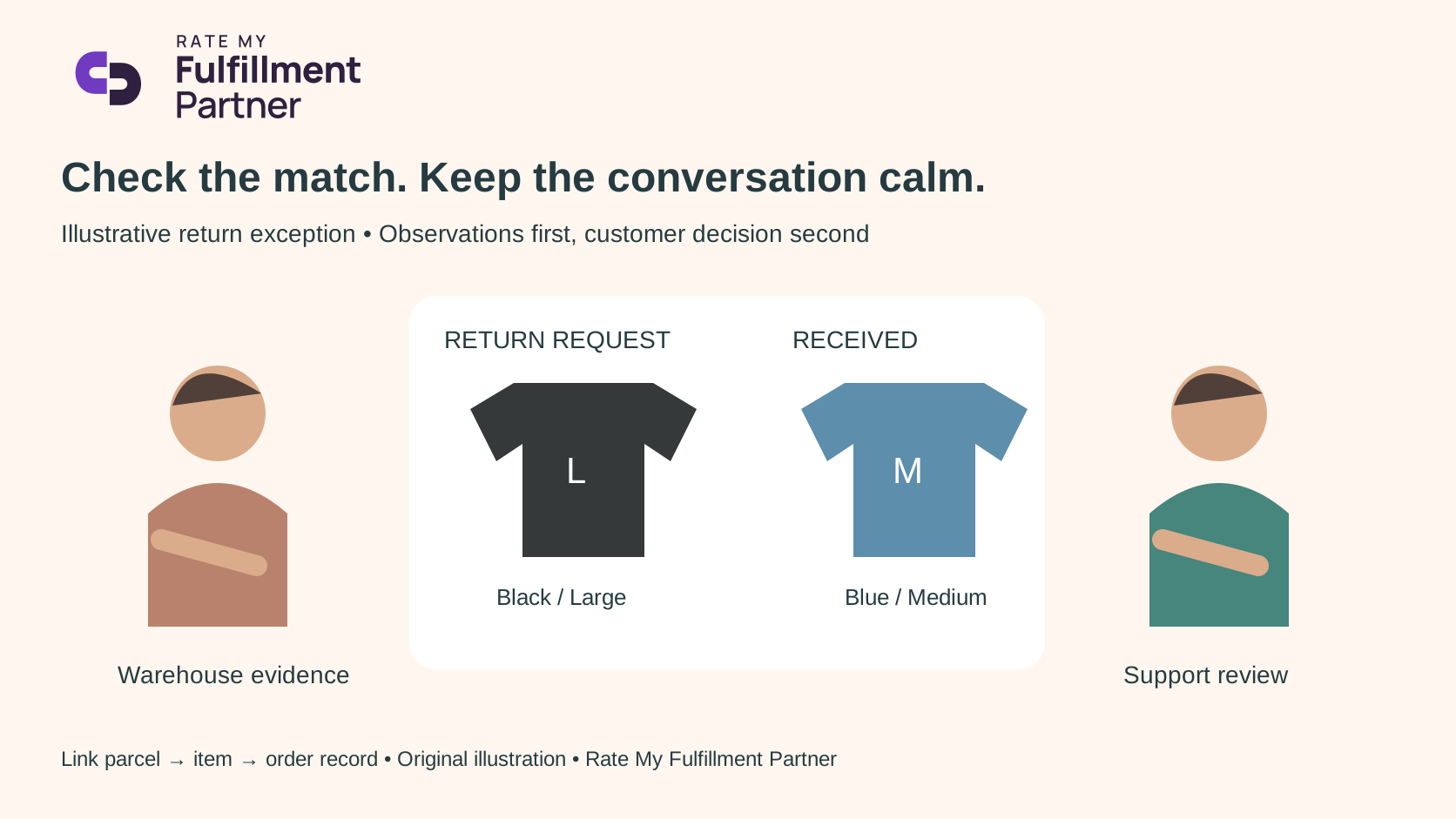
Your warehouse reports that a returned parcel contains a blue medium shirt, while the return request lists a black large shirt. It is tempting to turn that message into a customer accusation. Several links still need checking: the parcel-to-return match, the item identification and the original shipment record.
Agree on a neutral exception message with your 3PL before a case occurs. The useful first report names the expected item, the observed item, the return reference and the evidence available. “Wrong item returned” can remain an operational label, but it should not become an unsupported explanation of who caused the discrepancy.
Keep the record separate from the money decision
Shopify documents receipt and inspection before return processing, and permits removal of missing items from a return under stated conditions. That is a platform workflow, not a rule for deciding a customer’s entitlement or proof that a customer sent a different item. Shopify return processing.
Your commercial policy and authorized decision-maker should govern the next step. Ask the warehouse to preserve the item and relevant record while the brand reviews the exception. Do not let a physical mismatch silently become an automatic disposal instruction or a final customer refusal.
Three fictional cases, three different next questions
We examined three constructed evidence states. No customer dispute or provider investigation was reviewed.
| Evidence available | What it supports | Next question |
|---|---|---|
| Item photo only | An item was photographed | Which received parcel and return does it belong to? |
| Parcel reference and readable item label | A documented mismatch to the expected SKU | Was the expected record and original shipment identity correct? |
| Linked receipt, item record and shipment history | A stronger basis for a case-specific review | Who can decide and communicate the resolution? |
More records narrow uncertainty; they do not automatically establish intent. A photo may be clear while its association with the return is wrong. Checking the association can be more useful than requesting another close-up of the same item.
Give the customer one clear update
An illustrative message could say: “Our returns team recorded a different size from the one listed on the return. We are checking the parcel and order records before deciding the next step. Your support contact will update you by the agreed time.” Use an actual deadline your team can meet, and explain any information you need without implying guilt.
The 3PL should tell your team if the evidence is unavailable. Avoid repeatedly asking the customer for details the warehouse already holds. Where photographs include labels or other personal information, share only what is needed through the agreed channel.
Close both sides of the handoff
Record the commercial outcome and the physical disposition separately. A customer refund does not, by itself, specify whether the received item is restocked, held or sent elsewhere. Equally, completing a warehouse task does not confirm the customer received an explanation.
Use the three-case table as a proposed onboarding exercise. The partner you want is one that reports uncertainty clearly, protects the evidence and knows when the decision belongs to your team.
Related reading
Sources
- Shopify return processing — accessed November 11, 2026.