
Invite observations before complaints arrive
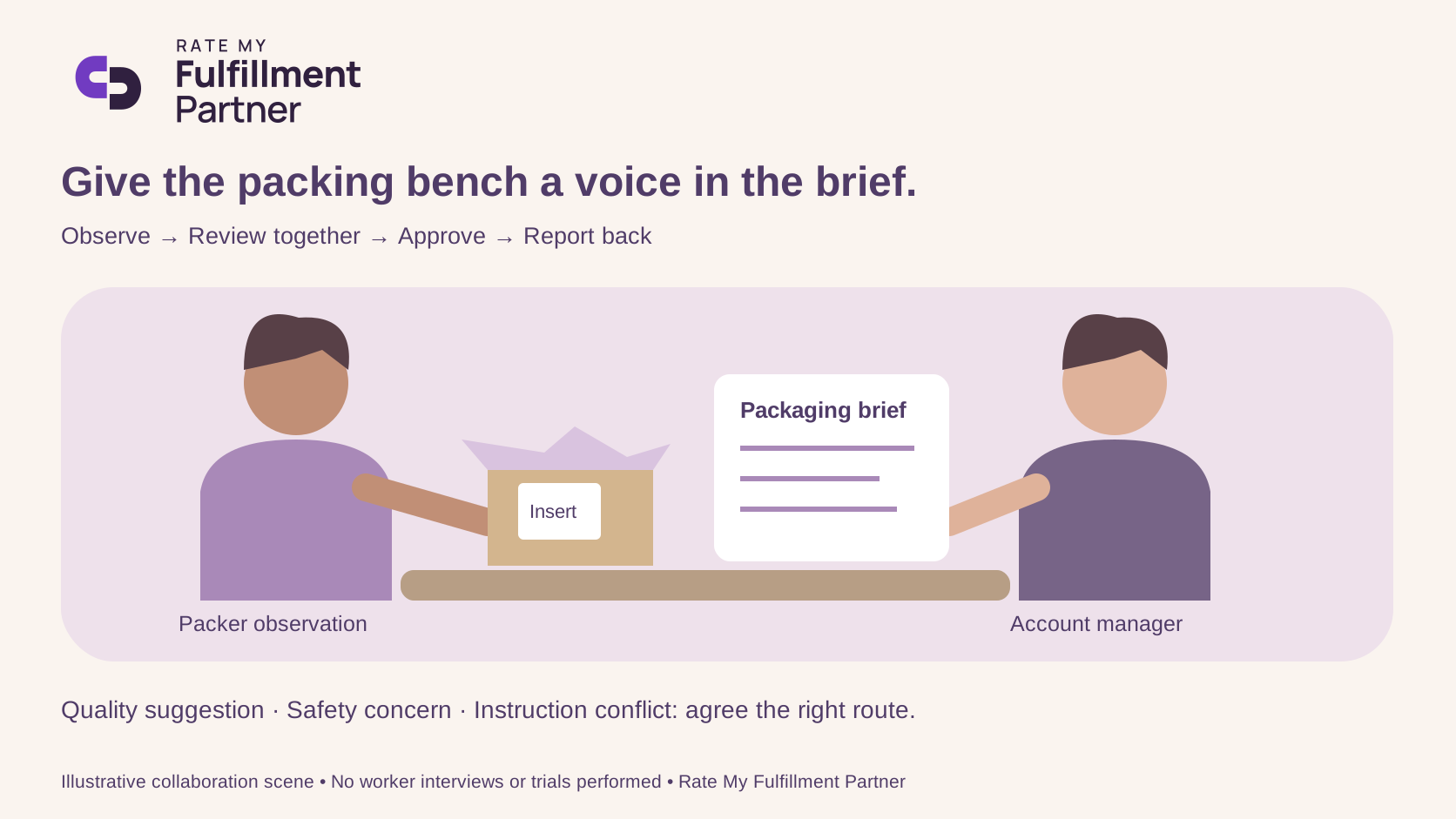
A brand approves a layered unboxing experience. At the packing bench, the insert keeps slipping, the seal is awkward to apply and a worker has found a more reliable sequence. Will that observation reach the brand, or remain a private workaround?
The relationship question is whether your 3PL gives practical feedback a route to a decision. Your account manager can organize that conversation without turning the brand into a second supervisor for warehouse employees.
OSHA's recommended practices emphasize worker participation in safety programs, including opportunities to raise concerns and receive feedback on action taken. That guidance addresses safety, not packaging aesthetics or a commercial service promise. It supports keeping a genuine safety concern in the provider's safety process while creating an appropriate channel for ordinary packout suggestions. OSHA worker participation.
Sort observations before choosing a response
We constructed three fictional comments from a packing operation and assigned each a review route. No workers were interviewed and no warehouse was observed. This is a discussion tool for a brand and its fulfillment partner.
| Observation | Proposed review route | What the brand contributes |
|---|---|---|
| The gift card falls behind the product | Packaging quality review | Required presentation and a sample for an approved trial |
| A repeated motion feels unsafe | Provider's safety process promptly | Willingness to revise brand requirements; no pressure to continue |
| Two instructions specify different tissue colors | Instruction clarification | One approved decision and effective version |
These comments should not compete in a popularity poll. A safety issue needs the employer's appropriate response; an aesthetic preference needs the brand's design decision. An instruction conflict needs clarification before anyone can evaluate execution fairly.
Ask for a small, permitted trial
For an ordinary packaging suggestion, agree on the proposed sequence, products included, quality criteria and person who can approve it. Use samples or a controlled trial authorized by the provider. Do not ask workers to quietly change live orders to prove an idea.
An illustrative trial might compare whether an insert remains visible after two different approved assembly sequences. Record the actual sample count, what was checked and limitations. Do not convert a few successful samples into a claim about damage rates or labor savings.
Close the conversation respectfully
The decision might be yes, no or more information needed. Explain it back through the agreed channel. If the original sequence stays, give a reason and resolve any unclear instructions. If it changes, update the controlled brief and agree how supervisors will communicate it.
When choosing a partner, request a redacted example of an operator suggestion reaching a brand decision. If none can be shared, walk through the three fictional comments together. Look for clear ownership and a feedback loop, not a promise that every suggestion will be adopted.
The point is a more useful working relationship: people doing the work can surface friction, and the brand can preserve the customer experience while responding to what the bench reveals.
Related reading
Sources
- Primary source — accessed November 9, 2026.