
Start with the customer who told you
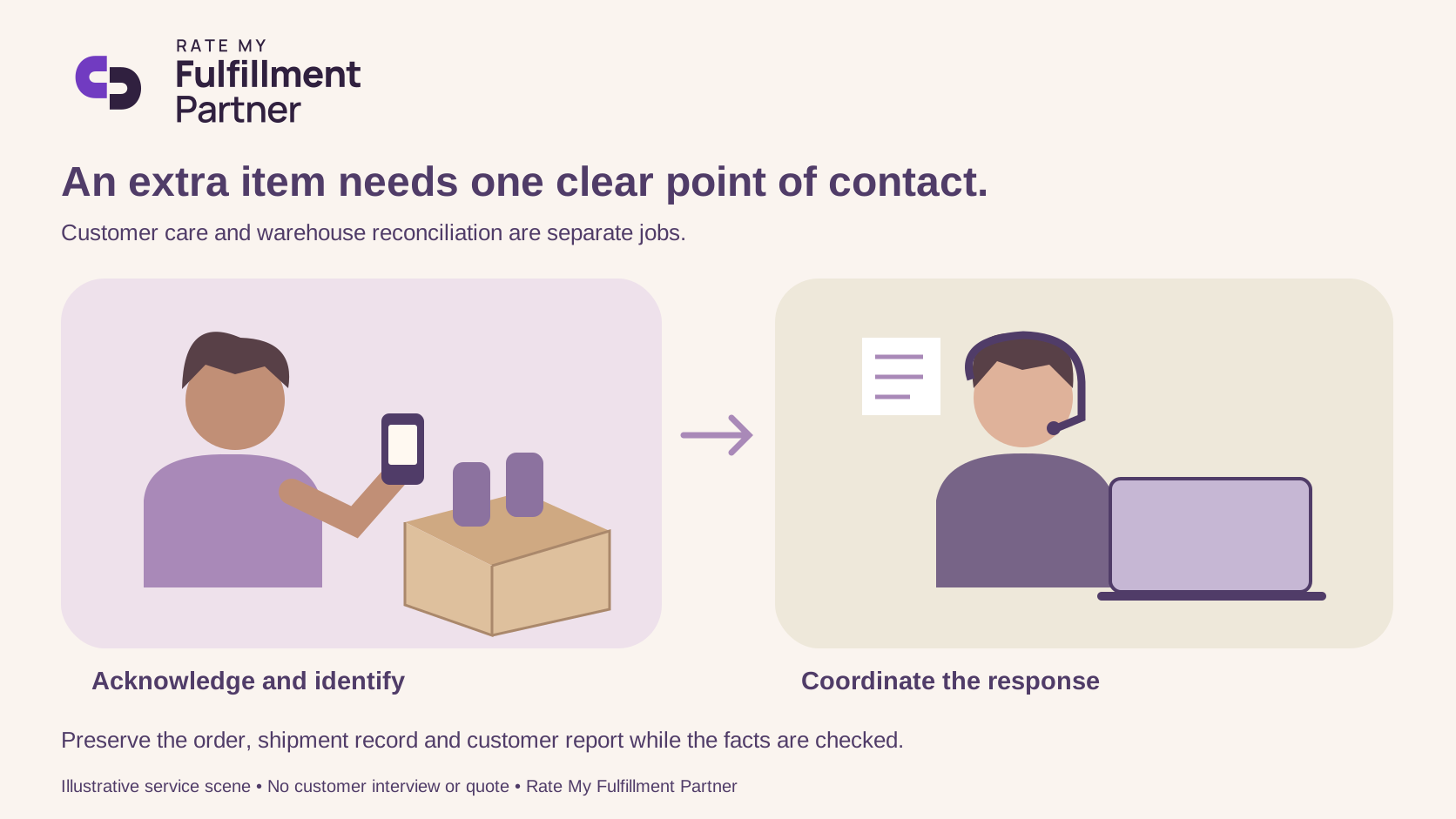
A shopper reports two products in the parcel when they ordered one. The first response should make it easy to explain what arrived. Thank them, confirm the order reference and ask only for the details needed to identify the extra item. Avoid asking them to diagnose the warehouse mistake.
Your support team and 3PL have different jobs at this point. Support owns the customer conversation. The warehouse investigates the pick, pack and inventory records. A discrepancy investigation should not leave the shopper waiting without a named contact or an expected next update.
Keep three records separate
The original order describes the purchase. The shipping record describes the warehouse’s reported execution. The customer’s report describes the arrival. Preserve all three while resolving the discrepancy. Changing the order to match the parcel can obscure the very difference you need to investigate.
Shopify’s order-editing documentation describes changes to products and quantities and separate payment or refund actions. That platform capability does not decide what a customer owes for an erroneous shipment. Route any disputed payment or return obligation to the brand’s responsible policy or legal owner; the warehouse should not make that decision by changing a quantity.
A three-case response exercise
We constructed three hypothetical reports to identify the handoffs. We did not interview customers or audit a warehouse.
| Report | First reconciliation question | Customer-care owner’s next step |
|---|---|---|
| Two of the ordered item arrived | Does the pack record show one or two units? | Confirm the report and explain when a decision will follow |
| An unrelated item arrived as well | Can the extra item be identified without exposing another customer’s information? | Collect minimal identification and coordinate a response |
| An extra parcel arrived later | Is it a duplicate dispatch, a replacement or an expected split shipment? | Check the original and replacement history before explaining it |
The cases share a customer-care owner, but they do not justify the same inventory adjustment. Two units in one box and a duplicate shipment can have different records, fees and causes. Mark unresolved facts as unresolved.
Agree on the practical remedy
If the brand proposes a return, support should explain the offered process and obtain the appropriate agreement before arranging collection. Confirm packaging, the destination, who supplies the label and whom the customer contacts if collection fails. Do not ask the shopper to improvise shipment of an unidentified or potentially restricted product.
If the approved response lets the customer keep the item, record that decision without presenting it as a warehouse reconciliation. The inventory discrepancy still needs an owner and an explanation. Likewise, a warehouse credit to the brand is separate from the message sent to the shopper.
Close the conversation and the investigation separately
Use two completion checks. Has the customer received the promised decision and practical instructions? Has the warehouse reconciled the relevant order, shipment and stock records? One can be complete before the other.
Bring the anonymized case into the next service review with its actual cause if established. A useful corrective action names the failed control, the person changing it and the evidence that will show whether it worked. The customer’s helpful report should lead to less confusion next time, not another unexplained request for a photograph.
Further reading
Sources
- Shopify: Editing orders — accessed 2026-11-05.