
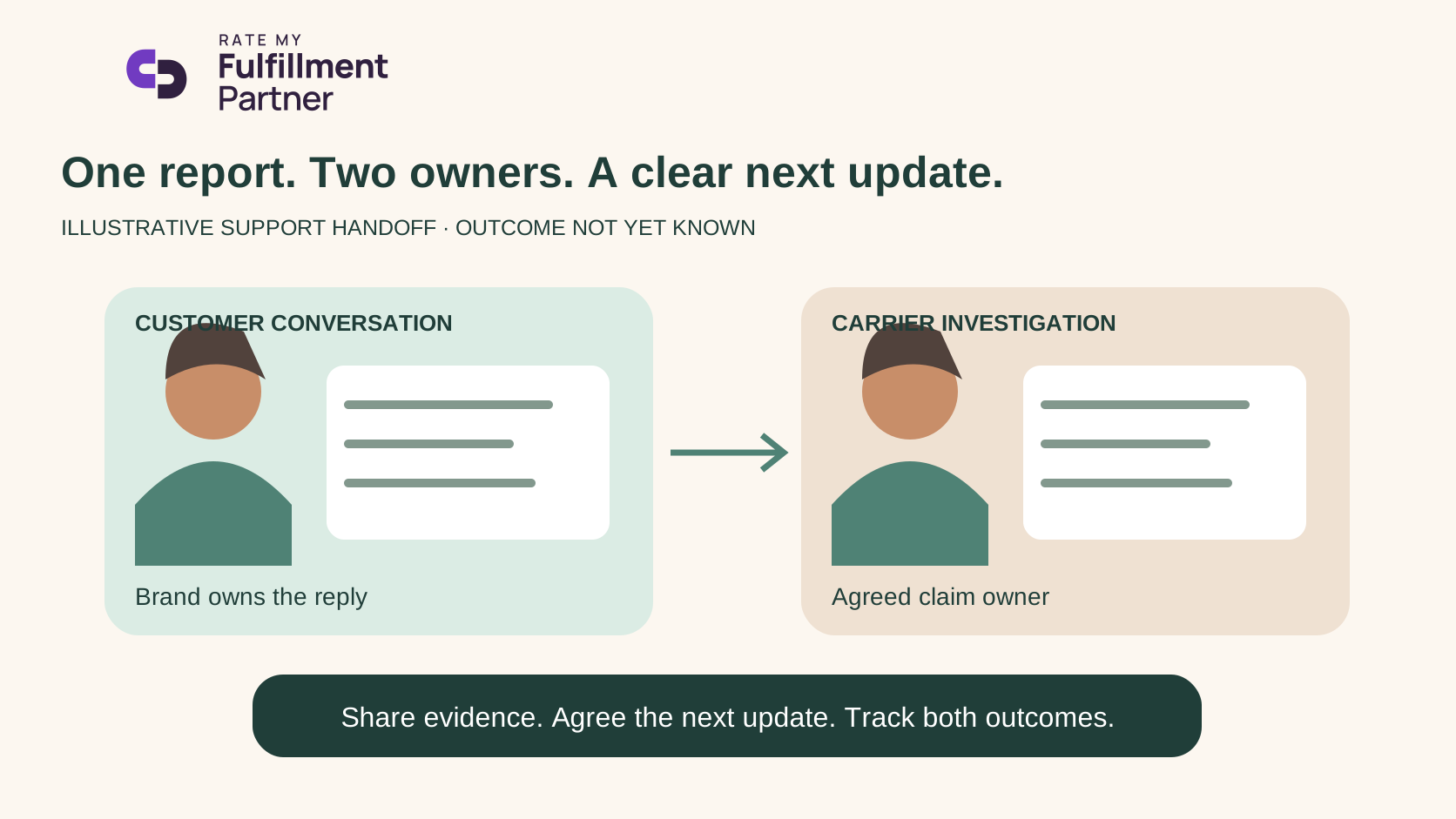
“Delivered” is the last tracking event, but your customer cannot find the parcel. The brand asks the warehouse for help. The warehouse sends the same tracking link back. Nothing in that exchange explains who will investigate or when the customer will hear something useful.
This is a relationship issue worth settling before you select a fulfillment partner. You need a handoff that accepts the report, gathers the relevant shipment information and makes the next action clear without making an accusation or promising an outcome the team cannot control.
Keep two workstreams visible
The customer needs an answer from the brand. The carrier may need a claim with supporting records. Those workstreams can progress at different speeds. A carrier case number is useful evidence of a filing; it is not confirmation that the customer has received a replacement or refund.
UPS's US claim guidance identifies tracking information and documentation of package value among the records to keep. It also describes filing routes for recipients and third-party shippers. Confirm the route and authority for the actual shipping account with your 3PL; do not assume the brand controls a claim because it sold the goods. Check current carrier terms rather than adopting one deadline for every service.
A three-handoff desk exercise
We constructed three fictional support responses and reviewed whether each identifies a brand contact, a claim owner and a next update. These are examples, not observed provider conversations.
| Response design | What is explicit | What is still missing |
|---|---|---|
| Tracking link only | Recorded tracking status | Investigation owner and customer follow-up |
| Claim number only | A filing reference | Brand response owner and update commitment |
| Named owners plus an update time | Who investigates and who replies | The eventual outcome, which remains unknown |
The third response does not prove a better investigation. It does give both teams a way to notice when the next agreed action has not happened.
Ask once, then share the evidence responsibly
Start with the order, tracking number and the customer's account of the problem. Check the shipment address against the order and review available delivery information. Ask relevant clarifying questions respectfully. Avoid asking the customer to repeat the same explanation separately to the brand, warehouse and carrier unless another party actually needs additional information.
Keep the evidence in an appropriately restricted case record. The warehouse can supply its shipment documents while the brand maintains the customer conversation. Record uncertain points as uncertain; a tracking event alone should not become an unsupported claim about the customer's conduct.
Agree who can make the customer decision
The 3PL should not improvise a replacement if the brand has not authorized it. The brand should not assume a carrier reimbursement is guaranteed. Define who can approve a remedy under the brand's policies and applicable obligations, and how that decision is recorded separately from the claim outcome.
A useful update can say that shipment records have been collected, a named team owns the investigation and the brand will contact the customer at the agreed time even if the investigation remains open. Use a real commitment your team can meet. When closing the case, record both what happened to the customer and what happened to the carrier claim; one closed status cannot reliably describe both.
Further reading
Use our 3PL selection guide to structure your shortlist and fulfillment pricing guide to check the full service scope.
Sources
Research accessed 2026-11-15.
- https://www.ups.com/us/en/support/file-a-claim
Research method and limitations
Designed three fictional support handoffs and inspected presence of customer ownership, claim ownership and update commitment; separated procedural evidence from customer outcome. No interviews or claims filed; not a carrier liability determination or consumer-law advice. Actual account authority and terms remain to be verified. No firsthand provider testing, interviews, surveys or outreach occurred.